
Signage with emotional storytelling outperforms informational designs by 11 to 12 percent, yet most restaurant and retail owners still treat their signs like nameplates. Your signage is not just a label on a wall. It is a conversation starter, a mood setter, and a brand ambassador working around the clock. In this article, you will learn exactly what visual storytelling in signage means, why it drives measurable results, which core elements make it work, and practical techniques you can apply this week.
Table of Contents
- What is visual storytelling in signage?
- Core components of visual storytelling signage
- How visual storytelling enhances customer engagement and brand identity
- Practical techniques for applying visual storytelling to signage
- Why most signage misses the mark—and how to fix it
- Take your signage to the next level with dynamic visual storytelling
- Frequently asked questions
Key Takeaways
| Point | Details |
|---|---|
| Story-driven signs boost engagement | Signage featuring emotional storytelling raises trust and customer action by up to 12 percent. |
| Dynamic displays capture attention | Moving and animated signage generates stronger recall and engagement than static alternatives. |
| Cultural relevance builds trust | Aligning signage visuals with local culture leads to higher audience trust and brand loyalty. |
| Practical design techniques work | Applying visual storytelling with tested themes and feedback turns signage into a customer magnet. |
What is visual storytelling in signage?
Visual storytelling in signage is the practice of combining images, typography, color, motion, and layout to communicate a brand’s values, personality, and emotional promise, all in seconds. Think of it as a short film compressed into a sign. The goal is not simply to identify your business. The goal is to make a customer feel something before they even walk through the door.
Traditional signage is primarily functional. It tells customers your name, your hours, your current promotion. Visual storytelling goes a level deeper. It draws on the same principles that make storytelling in advertising effective: narrative arc, emotional resonance, and audience relevance. A well-executed sign does not just say “fresh Italian food.” It shows sun-faded terracotta colors, a hand-painted font, and a simple image of a grandmother’s kitchen that says all of that without a single word of explanation.
The research backs this up. Story-driven signage creates a measurable lift in engagement and trust, which translates directly to longer dwell time, higher purchase intent, and stronger brand recall. For restaurants and retailers, those outcomes are not abstract marketing metrics. They mean more covers, higher basket sizes, and repeat visits.
The core benefits you can expect from visual storytelling in signage include:
- Higher emotional engagement: Customers who connect emotionally with your brand are more likely to return and recommend you.
- Stronger brand recall: A story sticks far longer in memory than a list of features or a plain logo.
- Increased trust: Authentic, culturally relevant visuals signal that you understand and respect your customers.
- Differentiation: In a busy retail strip or food hall, a story makes you stand out against competitors running generic promotions.
“A sign that tells a story turns a casual passerby into a curious customer. A sign that only shows your name turns them into a passerby.”
Building a compelling visual story starts with understanding the components that bring it to life. You can explore how logo signs for business set the foundation, and dig into logo projectors and brand memory for a deeper look at how projection technology supports recall. Pair that technical knowledge with a strong grasp of creative content marketing principles, and you have a powerful starting point.
Core components of visual storytelling signage
Now that we have established what visual storytelling is, let us look at the building blocks that make it work in a physical retail or restaurant environment.
Imagery and composition form the foundation. The images you choose whether photographs, illustrations, or abstract graphics carry emotional weight that words alone cannot match. Composition (the way visual elements are arranged) guides the viewer’s eye and controls what they notice first, second, and third. A well-composed sign creates a miniature journey. Your customer’s eye lands on the hero image, moves to the brand element, and ends on the call to action. The importance of graphic design in achieving that journey should not be underestimated.
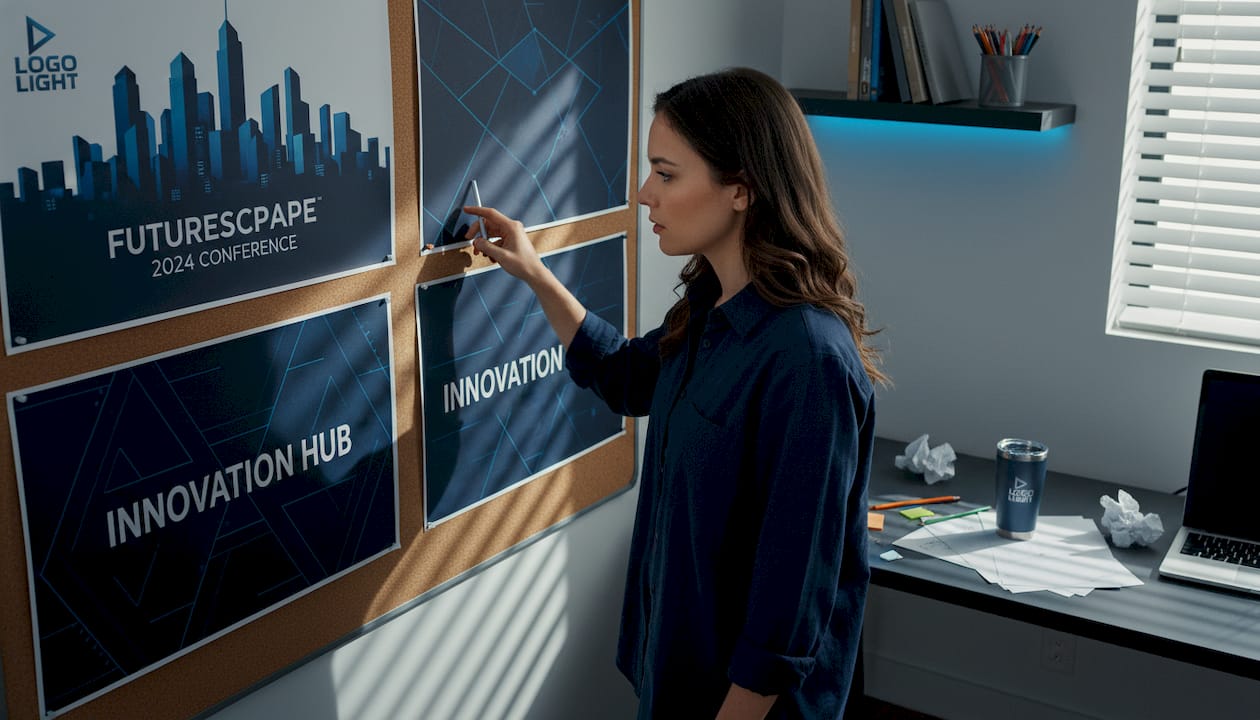
Color psychology is equally powerful. Warm tones like red and orange stimulate appetite and urgency, which is why so many fast-casual restaurants lean on them. Cool tones like navy and green suggest quality, calm, and trust, making them popular in premium retail. The key is consistency: your signage colors should mirror your brand palette so that every touchpoint reinforces the same emotional cue.
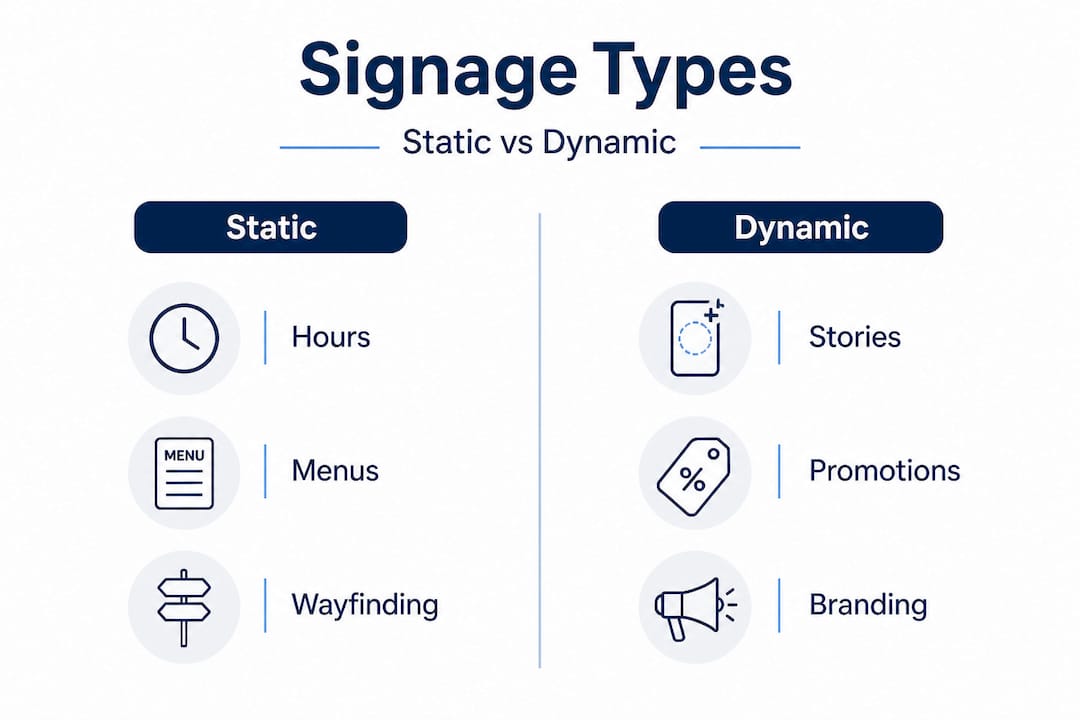
Motion and sequence are where modern signage technology raises the stakes considerably. Static signage is best for direct, informational messaging, while dynamic displays grab attention and amplify emotional impact. An animated logo projector cycling through seasonal brand visuals does more storytelling work in 30 seconds than a static decal can do in a week. Motion creates a sense of life, which is exactly what a busy restaurant or retail floor needs to feel inviting. You can learn more from our custom signage design guide and the detailed storefront sign guide.
Cultural alignment is the element most businesses overlook. Visuals that reflect the language, values, and aesthetic of your specific customer community signal belonging. A neighborhood coffee shop in the Pacific Northwest that uses imagery of local hiking trails and hand-lettered typography is speaking directly to its regulars in a visual language they recognize and trust.
| Feature | Static signage | Dynamic signage |
|---|---|---|
| Best use | Hours, menus, wayfinding | Brand stories, promotions, seasonal content |
| Attention capture | Moderate | High |
| Emotional impact | Low to moderate | High |
| Cost to update | Physical reprint required | Instant digital update |
| Storytelling capacity | Limited | Extensive |
Pro Tip: Spend 20 minutes walking through your neighborhood as a customer, not an owner. Note which businesses make you curious and which ones you walk past without a second glance. The difference almost always comes down to whether the sign tells a story or just states a fact.
How visual storytelling enhances customer engagement and brand identity
Understanding these advantages, it is important to know how the data translates into real-world business outcomes for restaurants and retailers specifically.
The numbers are clear. Emotional and culturally aligned signage delivers an 11 to 12 percent lift in customer engagement and trust compared to purely informational designs. For a restaurant averaging 200 covers a week, that lift could mean 22 additional tables turning per week from signage changes alone. For a retailer, a 12 percent trust improvement can meaningfully shift conversion rates, especially among first-time visitors.
“Signage that connects emotionally does not just attract attention. It builds the kind of trust that turns a first-time visitor into a loyal regular.”
Here is a three-step process for optimizing your signage visuals to maximize that lift:
- Lead with emotion. Before you place a single word on your sign, ask: how do I want my customer to feel when they see this? Hungry? Excited? Relaxed? Nostalgic? Every subsequent design decision should serve that emotional target. A brand checklist can help you keep those decisions consistent across all touchpoints.
- Prioritize clarity. Emotion and clarity are not opposites. A sign that is visually complex to the point of confusion defeats itself. The story needs to land in under three seconds, which is the average time a pedestrian glances at a storefront sign. Strip away anything that does not serve the core emotion or message.
- Align with cultural context. Review your customer demographic data. What do your regulars celebrate, value, and identify with? Build those references into your imagery. Local landmarks, seasonal traditions, and community events are all rich visual material that your competitors are probably ignoring.
Brand identity compounds over time. Each time a customer sees your story-driven signage, the emotional association strengthens. Research into how illuminated signs increase sales shows that visibility combined with strong brand visuals accelerates this compounding effect significantly. Businesses that invest in cohesive, narrative-rich signage report higher customer loyalty scores and stronger word-of-mouth referrals.
| Business type | Engagement lift with story-driven signage | Key storytelling element |
|---|---|---|
| Quick-service restaurant | 11% | Menu origin stories, local sourcing imagery |
| Fine dining | 12% | Heritage, craft, and atmosphere visuals |
| Specialty retail | 11 to 12% | Brand values, maker stories, community connection |
| Grocery and convenience | 10% | Freshness cues, local farm partnerships |
Businesses that tie their logo signs to sales impact understand that a logo is not just an identifier. It is the anchor for every story you tell. Pair a strong logo with rich visual narrative, and you create a brand identity that customers carry with them long after they leave your location. Our data on signage and foot traffic confirms that the right signage strategy has a direct and measurable effect on how many new customers find and choose your business.
Practical techniques for applying visual storytelling to signage
Having explored why visual storytelling works, let us look at exactly how to put it into practice in your restaurant or retail space.
Use narrative visuals, not decorative ones. Every image on your signage should earn its place by advancing the story. A photo of a smiling chef in your kitchen tells customers: this food is made by a real person who cares. A generic stock photo of a fork and plate tells them nothing. Specificity builds credibility. The more your visuals reflect your actual business, team, and community, the more authentic and trustworthy they feel.
Integrate local culture and references. Story-driven signage has proven to boost engagement and trust in both restaurants and retail stores, particularly when it features dynamic displays with locally resonant content. A downtown boutique featuring neighborhood street art in its window display is doing something that a chain store never can: speaking to exactly this community, in exactly this place.
Leverage technology to bring the story to life. Animated logo projectors cycle through brand narratives, seasonal themes, and promotional stories with no print costs and instant updates. Holographic displays create immersive moments that customers stop and photograph, turning your signage into organic social media content. You can explore current retail display trends and the specific capabilities of holographic signage displays to understand what is possible with today’s technology.
Use a practical signage storytelling checklist before every new design:
- Does the color palette match your brand and trigger the intended emotion?
- Does the primary image tell a story or just decorate the space?
- Is there a clear storytelling element that reflects your brand values?
- Is there a focused call to action that feels like a natural next step in the story?
- Does the design reflect your specific customer community and cultural context?
Working with graphic design services that specialize in retail and hospitality branding can accelerate this process considerably, especially if your current visuals were built without a storytelling framework in mind.
Pro Tip: Before launching a new signage design broadly, show mockups to five to ten of your most loyal customers. Ask them what emotion the sign gives them and what story they think it tells. Their answers will reveal gaps between your intention and their perception faster than any focus group report.
Why most signage misses the mark—and how to fix it
Here is an uncomfortable truth most signage vendors will not tell you: the majority of business signage is visually forgettable, not because the owners lack taste, but because they default to generic when they should be getting specific.
Walk any commercial street and you will see a parade of signs that say nothing more than a business name in a standard font on a standard background. These signs exist. They function as address markers. But they do absolutely nothing to build brand identity or invite customers in. The owners who built them probably thought: “clean and professional is enough.” It is not.
The businesses we see generating real engagement from their signage have one thing in common: they made an investment in cultural relevance. They asked who their customer really is, what that customer cares about, and how to reflect those values visually. Cultural alignment is essential in building trust through signage, and generic visuals consistently fail to deliver meaningful impact.
The hard lesson we have learned working with restaurant and retail owners is that great signage design is not purely about aesthetics. A sign can look beautiful on a designer’s screen and still fail in context because it was never tested against real customers in a real environment. Design decisions that seem obvious in a boardroom often miss entirely on a busy street corner at 6 pm.
Our recommendation: treat your signage like a campaign, not a permanent fixture. Set a review cycle of six to twelve months. Test new storytelling approaches with dynamic technology, such as the animated and customizable formats that logo projectors enable. Collect real feedback. Iterate. The businesses winning on signage in 2026 are the ones treating their visual presence as a living, breathing story, not a one-time installation.
Take your signage to the next level with dynamic visual storytelling
If the research and strategies in this article have made one thing clear, it is that static, generic signage is leaving real engagement and revenue on the table.
At Logo Light Store, we specialize in exactly the tools that bring visual storytelling to life in physical spaces. Our animated logo video projectors let you cycle through brand narratives, seasonal content, and promotional stories with zero print costs and instant updates. For businesses that want a permanent brand presence, our static logo projectors deliver crisp, attention-commanding visuals that anchor your story to your space. Whether you are a single-location restaurant or a growing retail brand, we have the display technology and design support to help you move from a nameplate to a narrative.
Frequently asked questions
How does visual storytelling impact customer engagement?
Signage with emotional and story-driven visuals lifts engagement and trust by 11 to 12 percent compared to purely informational designs, translating directly into higher foot traffic and conversion rates.
What are examples of visual storytelling in signage?
Examples include animated logo projectors cycling through seasonal brand themes, holographic displays that create immersive product experiences, and themed graphics that visually narrate your menu origin story or retail brand values.
Should I use static or dynamic signage for my business?
Use static signage for clear, permanent information like your hours or menu categories, and dynamic displays to capture attention and deliver emotional, story-driven brand content.
How can I ensure my signage resonates culturally?
Integrate local landmarks, community events, and imagery that reflects your specific neighborhood’s values and aesthetic, since cultural alignment boosts trust and makes customers feel seen and understood by your brand.
Recommended
- Top Ways Businesses Use Logo Projectors to Stand Out in 2026 – The Logo Light Store
- Brand Memory: How Logo Projectors Increase Recognition and Sales – The Logo Light Store
- Logo Signs for Business That Attract Customers | Logo Light™
- Effective Business Logo Signs That Increase Sales – The Logo Light Store
- Enhancing brand identity through creative content marketing